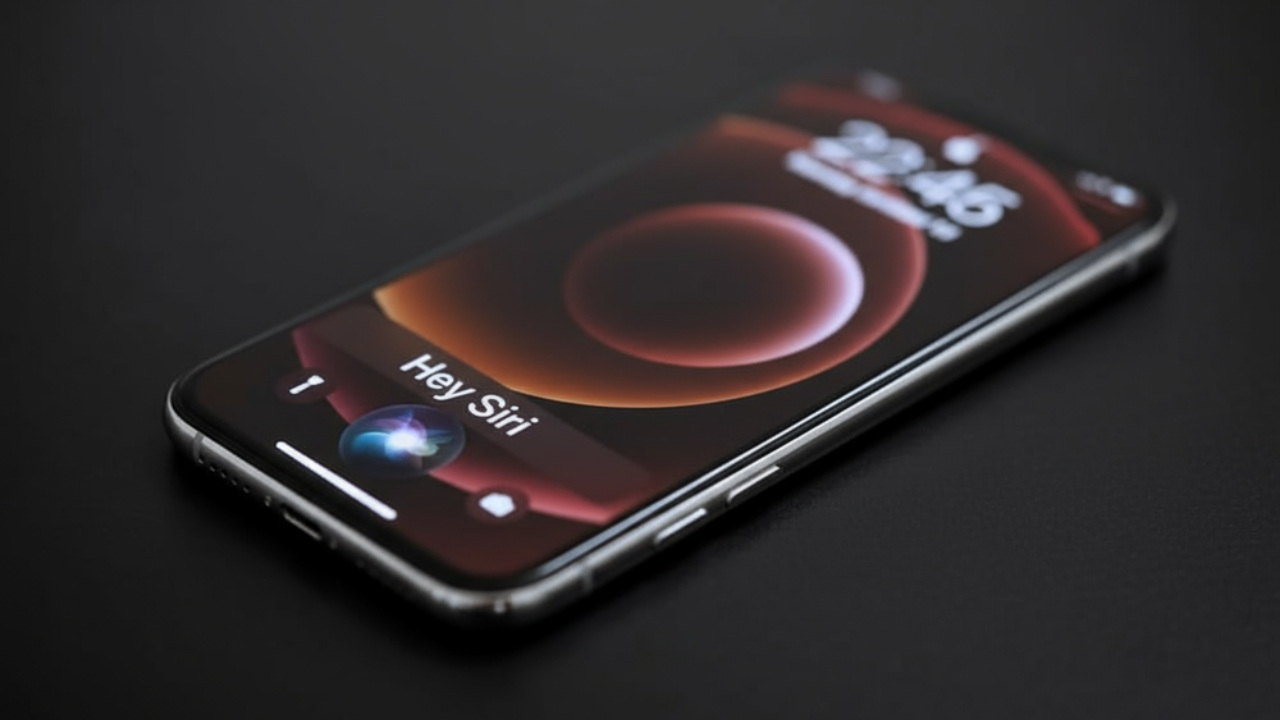

Apple is reportedly finalizing a landmark agreement to license a custom version of Google’s Gemini artificial intelligence model to power a major upgrade of Siri, according to Bloomberg reports. The deal, expected to be worth around $1 billion annually, would allow Apple to use Google’s 1.2 trillion-parameter AI system, one of the most advanced large language models currently available.
A Strategic Alliance Between Rivals
Apple’s decision marks a rare collaboration between two tech giants that have traditionally been rivals in software ecosystems. Sources familiar with the talks told Bloomberg that Apple evaluated multiple AI providers — including OpenAI and Anthropic — before selecting Google’s Gemini as a temporary solution to accelerate Siri’s transformation while Apple continues developing its own large-scale AI models.
The deal positions Google’s Gemini as a stopgap solution, enabling Apple to catch up in the AI race while maintaining control over user experience and privacy standards. More details were first reported by Reuters.
A Leap in AI Complexity
With 1.2 trillion parameters, Google’s Gemini is exponentially more powerful than the models currently used by Apple. This leap in complexity enables deeper contextual understanding, more natural conversation, and multi-step reasoning — areas where Siri has historically lagged behind Google Assistant and Amazon Alexa.

Analysts at The Verge note that licensing such a model allows Apple to “rapidly close the performance gap” without the massive infrastructure costs required to train its own trillion-parameter system from scratch.
Siri’s Long-Delayed Overhaul
Apple has been promising a revamped Siri experience for years, but internal challenges and leadership changes delayed progress. In March 2025, Apple confirmed that its next major Siri improvements would be delayed until 2026, without providing a reason.
Insiders reported that CEO Tim Cook lost confidence in former AI chief John Giannandrea, leading to Mike Rockwell taking over Siri’s AI division. These leadership changes reflect Apple’s renewed urgency to compete with rapid AI advancements from Google and Amazon.
Bloomberg previously reported that Apple’s internal AI strategy had been fragmented, prompting a company-wide realignment to unify efforts under one AI vision.
Privacy and Platform Control
Despite using Google’s model, Apple reportedly plans to run Gemini on its own cloud infrastructure, allowing it to enforce strict privacy controls. The company emphasized that no Google Search integration will be added to iOS or macOS as part of the agreement — ensuring user data stays within Apple’s ecosystem.
Tech privacy experts at TechCrunch suggest that this hybrid model — combining on-device AI with licensed cloud models — could set a new industry standard for privacy-first AI deployments.
The Bigger Picture
The Apple-Google AI partnership highlights how competitive pressures in the AI era are redefining traditional tech rivalries. Even the world’s most vertically integrated company is now partnering with competitors to stay ahead in artificial intelligence.
For users, this deal could mean a smarter Siri capable of:
- Understanding complex multi-step tasks (e.g., “Plan a dinner with friends next Friday and book a ride”)
- Offering more human-like, conversational responses
- Integrating better with third-party apps and Apple services
For developers, it could open new opportunities in voice-first app design and advanced SiriKit integrations.
Conclusion
Apple’s decision to license Google’s Gemini model is both strategic and symbolic — a short-term collaboration to ensure Siri’s evolution doesn’t fall behind, while paving the way for Apple’s own AI ecosystem in the near future.
As AI competition intensifies, partnerships like this one signal a new phase in Silicon Valley — where innovation may depend less on secrecy and more on strategic coexistence.

 By
By

 Binance推荐奖金 says:
  codice di riferimento binance says: